
OIL PAINTING EXERCISES FOR BEGINNERS -
WAITLIST IS OPEN
Learn to See and Simplify Values with Step-by-Step Oil Painting Exercises
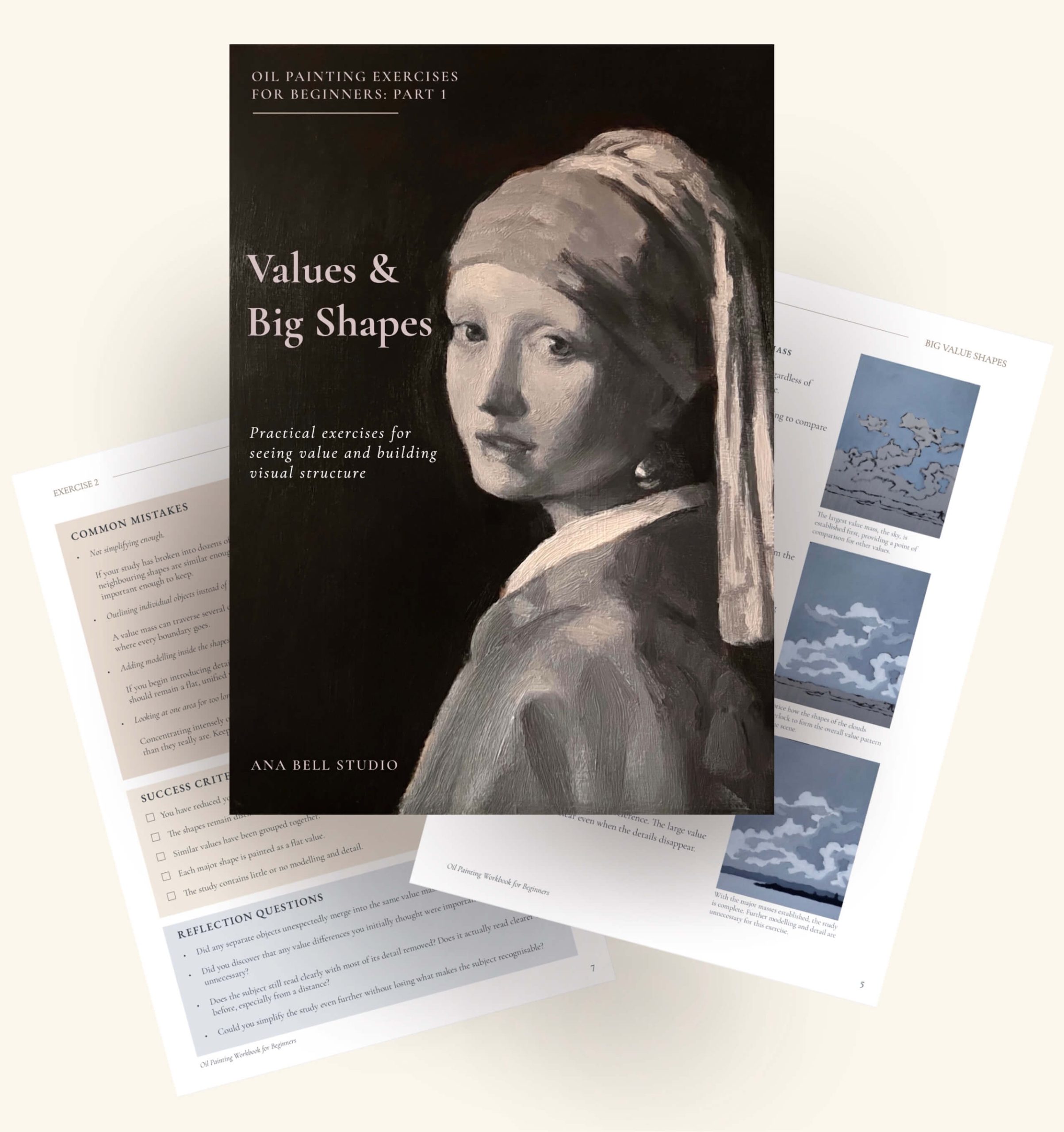
A practical workbook for beginner oil painters who want to build their skills through practical, step-by-step exercises.
This is the first part of my workbook designed to bridge the gap between understanding oil painting fundamentals and putting them into practice. If you’ve been learning from books and tutorials but still feel unsure what to do when you sit down to paint, these exercises will give you a clear place to start.
We’ll begin with values and big shapes, breaking them down into focused exercises so you can work on one skill at a time. You’ll learn to see and simplify values, giving your paintings a clear structure and a convincing sense of light and form.
Join the waitlist to find out when Part 1 is available and get a free exercise to try now.
Build your skills, one exercise at a time
Values are the foundation of a strong painting, but they’re also what beginner painters most struggle with. Targeted practice is the fast track for learning to get them right and use them to create beautiful paintings — that’s what these exercises are for!
When you’re working on a painting, you’re juggling values alongside drawing, colour, edges, and more. Sometimes you’ll look at your canvas and see that something isn’t working, but you might not know why. This workbook takes colour out of the equation and breaks the study of values into focused exercises so that you can concentrate on one skill at a time. Each exercise explains what you’re practising and why, and helps you assess your results so you can train your eye and apply what you’ve learned to your own paintings.
YOU WILL LEARN TO:
- Identify, compare, and mix values accurately.
- Simplify complex subjects and decide what to leave out.
- Make light and dark shapes work together in a composition.
- Use values to create a convincing sense of light and form.
- Evaluate your studies and apply what you've learned to your own paintings.
YOU WILL LEARN TO:
- Clear explanations of what you’re practising and what role it plays in a painting.
- Step-by-step instructions with demonstration photos.
- A selection of reference photos to choose from for your own study.
- Practical tips and common mistakes to look out for.
- Success criteria and reflection questions to guide your self-critique.

Join the waitlist and try a free exercise now!
Part 1 of the workbook will be available soon! Sign up to find out when it’s ready, and I’ll send you a free sample exercise from the workbook. In this exercise, you’ll practise reducing a complex subject to a few large value masses and learn to recognise the underlying structure before getting caught up in details.
FAQ
Is this workbook suitable for complete beginners?
Yes! We’ll start with the basics and build on them gradually. Each exercise explains the concept you’re working on, takes you through the process step by step, and gives you guidance for assessing your results.
How is this different from following a painting tutorial?
Rather than following along to recreate one particular painting, you’ll work on a specific skill and practise applying it to different subjects. The aim is to help you understand how and why something works and make your own decisions when you paint.
How will these studies help me with my own paintings?
These exercises build skills you can apply to any subject you choose to paint. They give you a chance to work through specific problems, so you’ll have a better idea of how to approach them in your own paintings.
Can I use water-mixable oils?
Absolutely! Water-mixable oils are what I use most often in my own work. You can use either traditional or water-mixable oils for these exercises.
About the Author
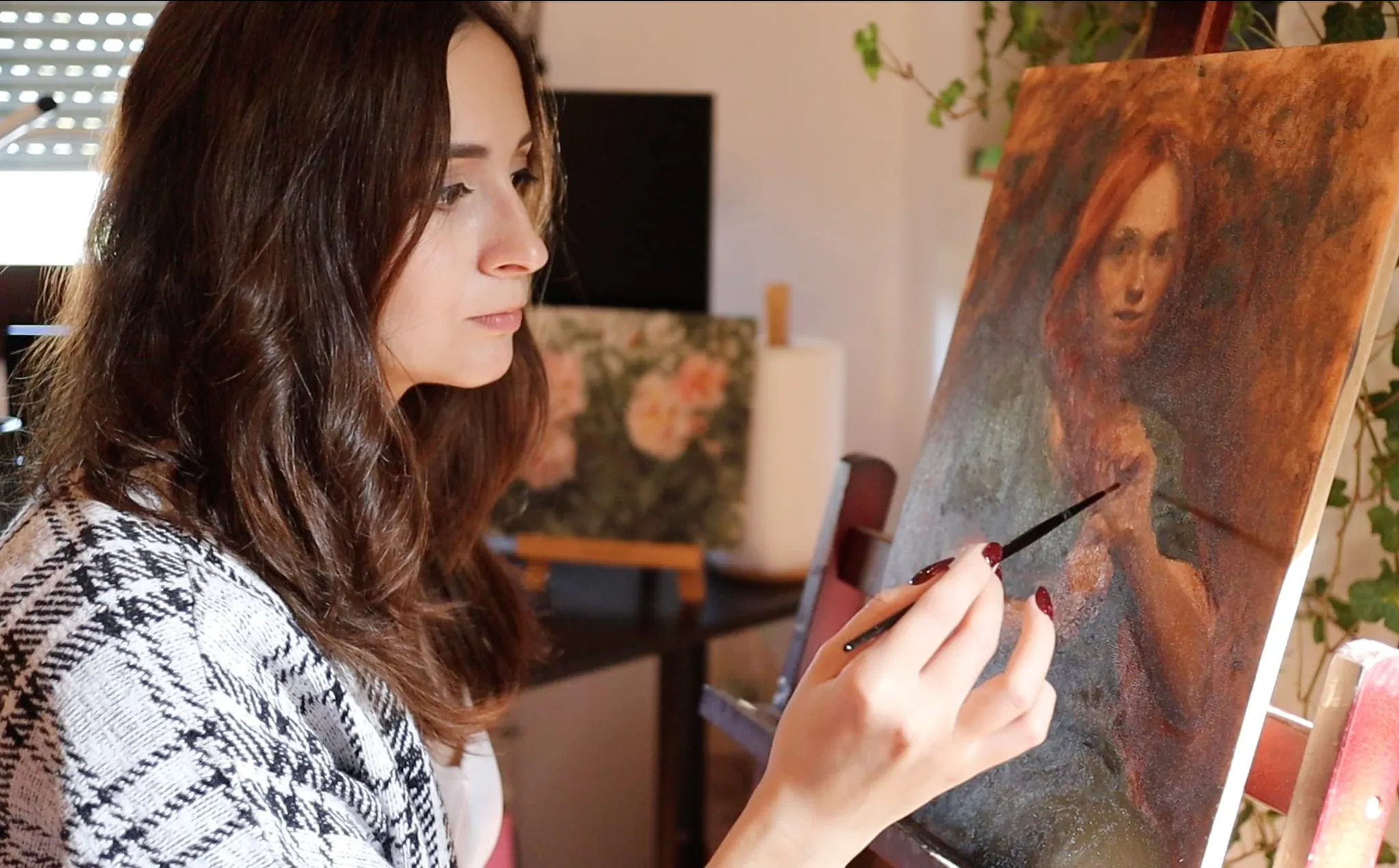
I’m Ana, a traditional oil painter and educator, and I know firsthand how challenging it can be to piece together your own art education. I believe that understanding painting comes from putting ideas into practice and learning to assess your own work. That’s why I enjoy breaking down complex concepts into exercises that give you something specific to try and learn from.